
During the period of the Second Caliph
(عمر بن الخطاب ) Umar Ibn al-Khattab رضي الله عنه
the Muslim forces, under the command of (أبو عبيدة عامر بن عبدالله بن الجراح ) Abu Ubaidah ibn al-Jarrah- رضي الله عنه lay siege to Jerusalem after capturing Damascus in the Battle of Yarmuk. The Patriarch of the city, Sophronius, stated that he would negotiate only with Caliph Umar and that nobody enters Jerusalem before Caliph Umar. On hearing this Caliph Umar informed that he was on his way.
Accompanied by a servant, Caliph Umar رضي الله عنه rode on camelback to Jerusalem though he could have been accompanied by an entourage that could have made the ground tremble under the hooves of horses. He did so to show simplicity by coming with one servant on one camel which they would take turns to ride.
On reaching Jerusalem, it was the servant’s turn to ride the camel and as a mark of respect and to ensure that the people see Caliph Umar رضي الله عنه , he wanted the Caliph to ride the camel. However Caliph Umar رضي الله عنه refused as it was the servant’s turn, and entered Jerusalem on foot while the servant rode the camel to the shock and surprise of everyone including Patriarch Sophronius. On reaching the place Caliph Umar رضي الله عنه continued the journey on foot carrying his shoes in hand under the astonished gaze of the people.
The Muslims who saw this spectacle recited the short prayers that refer to Allah’s absolute greatness and uniqueness. Caliph Umar رضي الله عنه walked to the army wearing modest threadbare clothes. The Christians who watched everything from the walls of Jerusalem were amazed at the strange simplicity, unable to believe that this simple man could be the leader of those well equipped armies.
But before he entered into Jerusalum Abu Ubaidah ibn al-Jarrah رضي الله عنه , who could not contain himself on seeing this unprecedented show of humility rushed to Umar’s side saying” today you have performed a magnificent deed before the people, perhaps you might….? Umar slapped him on the chest and criticized him saying
Tariq ibn Shihab reported: Umar ibn Al-Khattab رضي الله عنه , may Allah be pleased with him, said;
عَنْ طَارِقِ بْنِ شِهَابٍ قَالَ عُمَرُ بْنُ الْخَطَّابِ رضي الله عنه إِنَّا كُنَّا أَذَلَّ قَوْمٍ فَأَعَزَّنَا اللَّهُ بِالْإِسْلَامِ فَمَهْمَا نَطْلُبُ الْعِزَّةَ بِغَيْرِ مَا أَعَزَّنَا اللَّهُ بِهِ أَذَلَّنَا اللَّهُ
214 المستدرك على الصحيحين
1/117 المحدث الألباني خلاصة حكم المحدث صحيح على شرط الشيخين في السلسلة الصحيحة
“Verily, we were a disgraceful people and Allah honored us with Islam. If we seek honor from anything besides that with which Allah has honored us, then Allah will disgrace us.”
Source: al-Mustadrak 214
Grade: Sahih (authentic) according to Al-Albani
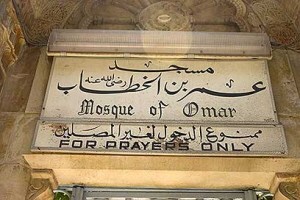
The Patriarch who saw the unfolding scenes with great admiration said to his people that nobody in the world would be able to stand up to these people and advised them to surrender to be saved. Negotiation took place and a famous treaty called ‘Umariyya Covenant” was concluded .This treaty is still preserved in the Church of the Holy Sepulchre in Jerusalem.
Such statements are to be reflected and pondered over when we look at the state of the ummah today and how it is common practice today for the Muslims to try and emulate practices which are far away from Islam to please the people under the assumption of it being something honourable, in sharp contrast to this Sahabee who Allah honoured in his life via companionship of the greatest of all creations صلى الله عليه و سلم and also in death for he is burried very next to his blessed body صلى الله عليه و سلم
This short piece cannot do justice of the profoundness of Umar Ibn Khatab رضي الله عنه , but it is worth highlighting another brief event we see his fairness and justice:
وأخرج ابن عبد الحكم عن أنس رضي الله عنه أن رجلاً من أهل مصر أتى عمر بن الخطاب رضي الله عنه فقال يا أمير المؤمنين عائذ بك من الظلم قال عذتَ معَاذاً قال سابقت ابن عمرو بن العاص فسبقته فحعل يضربني بالسوط ويقول أنا ابن الأكرمين فكتب عمر إلى عمرو رضي الله عنهما يأمره بالقدوم ويقدَم بابنه معه فقدم فقال عمر أين المصري؟ خذ السوط ضرب فجعل يضربه بالسوط ويقول عمر إضرب ابن الألأمَينْ قال أنس فضرب والله لقد ضربه ونحن نحب ضربه؛ فلما أقلع عنه حتى تمنينا أنه يرفع عنه ثم قال للمصري ضَعْ على صلعة عمرو فقال يا أمير المؤمنين إِنّما ابنه الذي ضربني وقد استَقَدْت منه فقال عمر لعمرو مذ كم تعبدتم الناس وقد ولدتهم أمهاتهم أحراراً؟ قال يا أمير المؤمنين لم أعلم ولم يأتني. كذا في منتخب كنز العمال
290 ابن عبدالحكم في فتوح مصر
Ibn Abd Al-Hakim reported: Anas, may Allah be pleased with him, said that a man from the people of Egypt came to Umar ibn Al-Khattab and said, “O leader of the believers, I seek refuge in you from injustice!” Umar replied, “You have sought someone willing.” The man said, “I competed with the son of Amr ibn Al-‘As and I won, but he started striking me with a whip and saying: I am the son of the dignified!” Upon this, Umar wrote to Amr ordering him to travel to him with his son. He came with his son and Umar said, “Where is the Egyptian?” He gave him the whip and told him to strike the son of Amr. The man started striking him while Umar was saying, “Strike the son of the illiterates!” Anas said, “By Allah, the man struck him and we loved his striking, and he did not stop until we wished he stopped.” Then Umar said to the Egyptian, “Direct it to Amr.” The Egyptian said, “O leader of the believers, it was only his son who struck me and I have settled the score.” Umar said to Amr, “Since when did you enslave the people though they were born from their mothers in freedom?” Amr said, “O leader of the believers, I did not know about this and he did not tell me.”
Source: Futuh Masr 290
The statement “Since when did you enslave the people though they were born from their mothers in freedom?” which is alive in the ethos of the modern world by being engraved in Article 4 of the UN Charter of the Universal Declaration of Human Rights
“No one shall be held in slavery or servitude; slavery and the slave trade shall be prohibited in all their forms.”
 Pearls of knowledge