

Many people attempt or intend to show love to the Prophet ﷺ, however many have fallen into extremes in this regard.
Two explicit examples of such extremism are:
- The Mawlid
There is nothing in the Qur’aan to say that we should celebrate the Mawlid or birthday of the Prophet ﷺ . The Prophet ﷺ himself did not do this or command anyone to do it, either during his lifetime or after his death. Indeed, he told them not to exaggerate about him as the Christians had exaggerated about Jesus . He said: “Do not exaggerate about me as the Christians exaggerated about the son of Maryam. I am only a slave, so say, ‘The slave of Allaah and His Messenger.’” (Reported by al-Bukhaari). What has been reported is that the Prophet ﷺ made the day of his birth a day of worship, which is different to celebration. He was asked about fasting on Mondays, and he said: “That is the day on which I was born and the day on which I was entrusted with the Mission or when I was first given Revelation.” (Reported by Muslim, al-Nisaa’i and Abu Dawood).
- The burda of busairi
This is a particular piece of Arabic poetry that has reached the Muslims in the west and has been translated into English. This poem is called Qasidah Al-Burdah by Muhammad Al-Busairi. It is also known as the most famous if not the most famous poem that supposedly praises the Prophet ﷺ. Below are some choice lines from this poem:
“For had it not been for him this world would not have come out ofnon existence. (Chapter 3/10)”
In this line Al-Busairi said the universe was not created except for the purpose of the Prophet ﷺ . This is an extreme exaggeration in the description of the Prophet ﷺ . We love the Prophet ﷺ but this love has a limit we cannot go beyond or below. For example, because of our love of the Prophet ﷺ we cannot say he is the son of Allah, as the Christians went into an extreme in loving their Prophet ﷺ. If we did this, we would be just like the Christians.
“I take an oath (of truth) by the moon that was split, it bears. A connection with his heart (which shows) the truth of my oath. (Chapter 5/7-8)”
Here the author gives an oath by the moon. As we know, giving an oath by other than Allah is minor shirk. The Prophet ﷺ said, “Whomever gives an oath by other than Allah has committed Shirk or kufr.”
Based on the above hadeeth the scholars are in agreement that it is not permissible to give an oath by other than Allah in any manner or form.
In an indirect way this objects to the miracles Allah has chosen for his messenger.
“Most generous of mankind, I have no one to take refuge in Except you at occurrence of widespread calamity. (Chapter 10/1-2)”
Al-Busairi says here that when the biggest of all hardships befalls him, he has no one to turn to but the Prophet ﷺ. This is one of highest levels of shirk.
وَلَا تَدْعُ مِنْ دُونِ اللَّهِ مَا لَا يَنْفَعُكَ وَلَا يَضُرُّكَ ۖ فَإِنْ فَعَلْتَ فَإِنَّكَ إِذًا مِنَ الظَّالِمِينَ
“And invoke not besides Allah, any that will neither profit you, nor hurt you, but if (in case) you did so, you shall certainly be one of the Zalimun (polytheists and wrong-doers).” [10:106]
قُلْ إِنْ كُنْتُمْ تُحِبُّونَ اللَّهَ فَاتَّبِعُونِي يُحْبِبْكُمُ اللَّهُ وَيَغْفِرْ لَكُمْ ذُنُوبَكُمْ ۗ وَاللَّهُ غَفُورٌ رَحِيمٌ
Say (O Muhammad SAW to mankind): “If you (really) love Allah then follow me (i.e. accept Islamic Monotheism, follow the Quran and the Sunnah), Allah will love you and forgive you of your sins. And Allah is Oft-Forgiving, Most Merciful.” [3:31]
If we want to judge for ourselves what is true love for the Prophet, then we have to look no further then the example of the early generation of Muslims and those that have followed them in goodness from contemporary times.
It was in the second century Hijrah when most of the Sahaba who had learned Islam from the Holy Prophet ﷺ directly were diminishing one after another. The last of Prophet’s ﷺ companions passed away in 110 A.H. Subsequently a possibility of misquoting the Prophet ﷺ by some people with vested interest was quite apparent. So it was essential to collect and authenticate true Hadiths without sponsorship of any ruling authority, regional or national. It was a gigantic work to collect all the prevailing statements and to classify them into the relevant categories, as authentic, good, poor and false. This was a great task, which Imam Bukhari رحمه الله, a non-Arab from Khorasan, shouldered. He spent 16 years in searching, collecting and refining the material of Hadith. Not only this, he fixed the most rigid rules to evaluate and authenticate any circulating Hadith. Thus he is known as the Founder of Hadith science علم الحديث
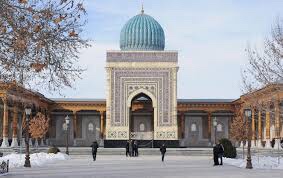
The rest of his life was spent in teaching and propagating the Hadith literature. He visited Egypt and Syria twice, Basra four times, spent many years in Hijaz and went to Kufa and Baghdad many times. It is said that he learned about 600,000 Hadith from more than 1,000 scholars. It has been known to be said by Imam Bukhari رحمه الله himself that, “I have written ahaadeeth from 1080 different people all of whom were scholars.”
Similar historical accounts can be relayed for all the other Muhadatheen محدثين around the time of Imam Bukhari رحمه الله as well as many in more contemporary times.
It is also recorded in the books of history that the Muhadatheen, محدثين when they obtained a hadeeth, if they knew that the person one level up in the Isnaad الإســنــاد was still alive, they would strive to find and meet that person so that they could get closer to the Prophet ﷺ metaphorically by way of the chain of narration going back to our beloved Messenger.
In later times, the Muhadatheen محدثين attempted to connect themselves to the famous earlier Muhadatheen and their compilations of hadeeth by explaining them and writing extensive books of exegesis so that people in their times and later generations could better understand the context of the hadeeth. Amazing examples of this is Hafiz Ibn Hajar Asqalani Ibn Ḥajar al-ʿAsqalānī رحمه الله (d. 852 AH) ابن حجر العسقلاني, and his famous exegesis of Sahih Bukhari; fath al bari Similarly we have Imam Abu Zakaria Yahya Ibn Sharaf al-Nawawī رحمه الله (d. 676AH) Al Minhaj bi Sharh Sahih Muslim شرح صحيح مسلم, which is one of the most detailed explanations of Muslim Ibn Hajaj’s رحمه الله (d. 261 AH) – a contemporary and student of Imam Al Bukhari رحمه الله – Hadith collection; Sahih Muslim.
Another amazing book demonstrating true love for the Prophet ﷺ was Abū ‘Īsá Muḥammad ibn ‛Īsá as-Sulamī aḍ-Ḍarīr al-Būghī at-Tirmidhī رحمه الله (d. 279 AH )أبو عيسى محمد بن عيسى السلمي الضرير البوغي الترمذي – Shamā’il Muhammadiyyah (“The Appearance of Muhammad”), which is is a collection of hadiths regarding the intricate details of the Prophet’s ﷺ appearance, belongings, manners and life. The book contains 399 narrations from the Sahabah which are divided into 56 chapters.
This beautiful and famous work has been extensively explained by the contemporary scholars like; Shiekh Abdul Razzaq Al Badr’s – Shar Shamā’il al Nabi – which is a compilation of forty five lessons the Shiekh gave at the Prophet’s ﷺ masjid, Abdul Rahman ibn Abdul Rahim Al Mubarakfuri’s رحمه الله – Tuhfatul Ahwadhi bi Shar Jami Al Tirmidhi, Ibn Rajab Al Hanbali’s رحمه الله – Lata’if al Ma’rif fima lima wasim al Aam min al Wadha’if and Muhammed Al Shawkani’s رحمه الله- Nail Al Awthar, to name a few.
Again the contemporary scholars have connected them to this work by explaining it, to demonstrate their true love for the Prophet ﷺ.
Similarly, we have Abū Bakr Aḥmad ibn Ḥusayn Ibn ‘Alī ibn Mūsa al-Khosrojerdi al-Bayhaqi’s رحمه الله (d. 458 AH), البيهقي amazing work called Dala’il al-Nubuwwah (The Signs of Prophethood), where he brings hadith describing the miracles of the Prophet ﷺ.
So in conclusion, we can see by the examples of these illustrious scholars, past and present, that to love the Prophet ﷺ is to revive his Sunnah ﷺ and to connect ourselves to the statements of the Prophet ﷺ , seek knowledge of the sunnah and lead a life as close as possible to the exemplary example he ﷺ left as an example:
لَقَدْ كَانَ لَكُمْ فِي رَسُولِ اللَّهِ أُسْوَةٌ حَسَنَةٌ لِمَنْ كَانَ يَرْجُو اللَّهَ وَالْيَوْمَ الْآخِرَ وَذَكَرَ اللَّهَ كَثِيرً
Indeed in the Messenger of Allah (Muhammad SAW) you have a good example to follow for him who hopes in (the Meeting with) Allah and the Last Day and remembers Allah much. [33:21]
…, rather then doing whatever pleases our desires.
 Pearls of knowledge