

There are many instances in the seerah (the life of the Prophet ﷺ ) where he ﷺ wept or cried. These key events are there for a believer to reflect upon and to contemplate when facing difficulty in his or her own life. They are also there to grow in love for our beloved Messenger and give some idea of the hardships he had to endure for the sake of his Ummah
لَقَدْ جَاءَكُمْ رَسُولٌ مِنْ أَنْفُسِكُمْ عَزِيزٌ عَلَيْهِ مَا عَنِتُّمْ حَرِيصٌ عَلَيْكُمْ بِالْمُؤْمِنِينَ رَءُوفٌ رَحِيمٌ
Verily, there has come unto you a Messenger (Muhammad ﷺ) from amongst yourselves (i.e. whom you know well). It grieves him that you should receive any injury or difficulty. He (Muhammad ﷺ) is anxious over you (to be rightly guided, to repent to Allah, and beg Him to pardon and forgive your sins, in order that you may enter Paradise and be saved from the punishment of the Hell-fire), for the believers (he ﷺ is) full of pity, kind, and merciful. [9:128]
The earliest report occurs when he ﷺ was just 6 years old. There was a servant lady named ‘Baraqah’ , her actual name was Umm Ayman. She looked after the Prophet ﷺ since he was born, she delivered him from his mother. Once, when his mother was travelling from Shaam on the way to Makkah, at a distance of about 20km away she fell ill and couldn’t move anymore and sadly she passed away from the illness. The first encounter of death he saw ﷺ was of his own mother.
Abu Huraira رضي الله عنه reported: The Apostle of Allah ﷺ visited the grave of his mother and he wept, and moved others around him to tears, and said: I sought permission from my Lord to beg forgiveness for her but it was not granted to me, and I sought permission to visit her grave and it was granted to me. So visit the graves, for that makes you mindful of death [The Book of Prayers (Kitab Al-Salat) Muslim :: Book 4 : Hadith 2130]
Later in life, when he ﷺ became a messenger, Allah عزوجل reminded him of His favours upon his messenger ﷺ as a form of consolation for him.
مَا وَدَّعَكَ رَبُّكَ وَمَا قَلَىٰ –
Your Lord (O Muhammad (ﷺ)) has neither forsaken you nor hated you. [93:3]وَلَلْآخِرَةُ خَيْرٌ لَّكَ مِنَ الْأُولَىٰ –
And indeed the Hereafter is better for you than the present (life of this world). [93:4]وَلَسَوْفَ يُعْطِيكَ رَبُّكَ فَتَرْضَىٰ –
And verily, your Lord will give you (all i.e. good) so that you shall be well-pleased. [93:5]أَلَمْ يَجِدْكَ يَتِيمًا فَآوَىٰ –
Did He not find you (O Muhammad ﷺ) an orphan and gave you a refuge? [93:6]وَوَجَدَكَ ضَالًّا فَهَدَىٰ –
And He found you unaware (of the Quran, its legal laws, and Prophethood, etc.) and guided you? [93:7]وَوَجَدَكَ عَائِلًا فَأَغْنَىٰ –
And He found you poor, and made you rich (self sufficient with self contentment, etc.)? [93:8]
Khadeejah رضي الله عنها was 40 and he was 25 and she was a widow, but due to her impeccable character he ﷺ married her. She was the first to believe in him. When she died he ﷺ cried. Even years and years later when he was close to 60 years old Aisha رضي الله عنها, on one occasion saw him sitting with an old woman who was over 80 years old and laughing – when Aisha رضي الله عنها inquired as to who this old lady was, he ﷺ said she was one of the close friends of Khadeejah رضي الله عنها.
Once, the Messenger of Allah ﷺ was mentioning the good deeds of Khadeejah رضي الله عنها and Aisha رضي الله عنها was there. She could not help saying, “You always mention Khadeejah . However, Allah gave you younger and more beautiful wives than her.” Thereupon, the Prophet ﷺ said,
“No. Allah did not give me anyone better than her because when everybody was in unbelief, she believed in me. When everybody denied me, she approved me. When I was deprived of everything, she shared her property with me. And Allah gave me children from her.” [Ibn Kathir: The wives of the Prophet ﷺ]
“Qutaibah ibn Sa’eed narrated to us [saying]: Muhammad ibn Fudail narrated to us from Ummarah from Abu Zur’ah from Abu Hurairah, may Allaah be pleased with him, that he said, “Jibreel came to the Prophet ﷺ and said, ‘O Messenger of Allaah! This is Khadijah coming to you with a dish having meat soup (or some food or drink). When she reaches you, greet her on behalf of her Lord and on my behalf and give her the glad tidings of having a palace made of Qasab in Paradise, wherein there will be neither any noise nor any toil.’” [Bukhaari, no. 3820 and Muslim, no. 2432].

On the night before the battle, the Prophet ﷺ made a very long and intense supplication to Allah عزوجل. He was praying under a tree, crying until the sun rose. He was standing up, raising his hands, to the point that the cloth on his shoulders fell down:
اللَّهُمَّ أَنشُدُكَ عَهدَكَ وَوَعْدَكَ, اللهُمَّ إِن شِئْتَ لَمْ تُعبَدْ
“O Allah! I invoke You for Your promise (of victory). O Allah! If You decide (that we be defeated), You will not be worshiped!” [Sahih Muslim 1763]
After the battle of Badr, after a decisive victory for the Muslims, the Muslims took captives from the Quraish and allowed any family members to ransom them free, so Zainab رضي الله عنها (the daughter of the Prophet ﷺ) who was at the time married to Abul Aas (who was one of the Mushrikeen at that time and on the side of the enemy), Zainab came and wanted to randsom her husband and she bought with her a necklace which belonged to Khadeejah which he ﷺ gave to her as a gift when he married her, and it was the same necklace Khadeejah gave to Zainab as a wedding gift, he RasoolAllah ﷺ, upon seeing the bracelet, remembered Khadeejah and cried until his beard was soaked. The Prophet ﷺ did not allow any cash ransom for Abul Aas and sent him home.
Khadeejah’s death along with the death of Abu Talib (the Prophet ‘s ﷺ uncle) took its toll on the Prophet as he lost his two main forms of support. However again, Allah عزوجل did not forsake his Prophet ﷺ
أَلَمْ نَشْرَحْ لَكَ صَدْرَكَ –
Have We not opened your breast for you (O Muhammad ﷺ )?[94:1]وَوَضَعْنَا عَنكَ وِزْرَكَ –
And removed from you your burden, [94:2]الَّذِي أَنقَضَ ظَهْرَكَ –
Which weighed down your back? [94:3]وَرَفَعْنَا لَكَ ذِكْرَكَ –
And raised high your fame? [94:4]فَإِنَّ مَعَ الْعُسْرِ يُسْرًا –
So verily, with the hardship, there is relief, [94:5]…and blessed him with a great reward, the night journey to Jerusalem and journey to the heavens where Allah عزوجل spoke directly to the Prophet ﷺ
سُبْحَانَ الَّذِي أَسْرَىٰ بِعَبْدِهِ لَيْلًا مِّنَ الْمَسْجِدِ الْحَرَامِ إِلَى الْمَسْجِدِ الْأَقْصَى الَّذِي بَارَكْنَا حَوْلَهُ لِنُرِيَهُ مِنْ آيَاتِنَا ۚ إِنَّهُ هُوَ السَّمِيعُ الْبَصِيرُ –
Glorified (and Exalted) be He (Allah) [above all that (evil) they associate with Him] [Tafsir Qurtubi, Vol. 10, Page 204] Who took His slave (Muhammad ﷺ ) for a journey by night from Al-Masjid-al-Haram (at Makkah) to the farthest mosque (in Jerusalem), the neighborhood whereof We have blessed, in order that We might show him (Muhammad ﷺ ) of Our Ayat (proofs, evidences, lessons, signs, etc.). Verily, He is the All-Hearer, the All-Seer. [17:1]
After returning to Madina victorious,
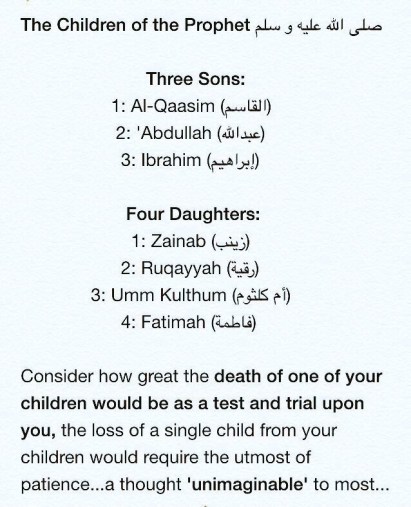
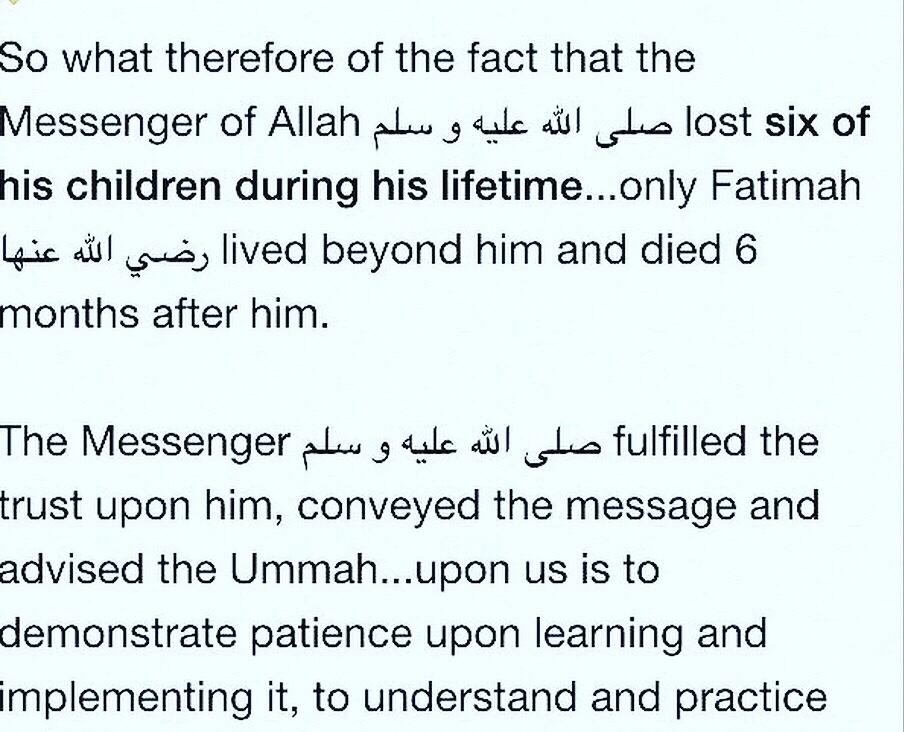
Ruqayyah رضي الله عنها the other daughter of the Prophet fell ill in March 624. Uthman رضي الله عنه her husband was with her, who missed the battle of Badr, since the Prophet ﷺ had asked him to stay behind and nurse her. She died later in the month, on the day when Zayd ibn Harithah رضي الله عنه returned to Medina with news of their victory at the Battle of Badr. When the Prophet ﷺ returned to Medina after the battle, he was met with the news of the death of the beloved daughter Ruqayyah رضي الله عنها.
Then comes the matter of Julaybib رضي الله عنه , who was an individual shunned by society, but through Islam he found honour and the Prophet had him married off to one of the honourable women of the Ansar.
Soon, after his marriage, Julaibib رضي الله عنه went on an expedition with the Prophet ﷺ, and an encounter with some mushrikin ensued. When the battle was over, the Prophet asked his companions: “Have you lost anyone?” They replied giving the names of their relatives or close friends who were killed. He put the same questions to other companions and they also named the ones they had lost in the battle. Another group answered that they had lost no close relatives whereupon the Prophet ﷺ said: “But I have lost Julaybib. Search for him in the battlefield.” They searched and found him beside seven mushrikin whom he had struck before meeting his end. The Prophet ﷺ stood up and went to the spot where Julaybib, his short and deformed companion, lay. He stood over him, cried and then went on to say: “He killed seven and then was killed? This (man) is of me and I am of him.” He repeated this two or three times. The Prophet ﷺ then took him in his arms and it is said that he had no better bed besides the forearms of the Messenger of Allah ﷺ. The Prophet ﷺ then dug for him a grave and himself placed him in it. He did not wash him for martyrs and not washed before burial. [Sahih Muslim]
Once Aisha رضي الله عنها, ‘O Messenger of Allah, was there any day more difficult to you than on the day of the battle of Uhud?” (for on the battle of Uhud, the Prophet ﷺ was wounded, blood was coming from his blessed face, his teeth were dislodged, and even an arrow came and hit him).
The Prophet ﷺ said, ‘Yes, the day of Taif was worse for me than the day of Uhud; that was the most difficult point of my life’.
When the Prophet ﷺ approached the tribe of Saqeef (the inhabitants of the city of Taif), he asked to meet the chief of the town, and the chiefs of the town were in fact three brothers (Their father was once the chief of the city, but once he died, the brothers decided to share the power among each other). So the three chiefs agreed to meet the Prophet ﷺ as they didn’t know why he ﷺ wanted to meet them. When the Prophet ﷺ introduced him as the Messenger of Allah, told them about Islam, about worshiping only one God, and leaving idol worshiping, the three brothers ridiculed and insulted him in the worst possible manner. One of them said, ‘If you are a Prophet, I might as well destroy the Kaabah‘ (meaning what’s the point), another said, ‘Did Allah not found any one better than you to send? You are the one He has chosen?’, the third one said, ‘If you are a Prophet, then you are too Holy for me to speak to, and if you are not a prophet (i.e. if you are a liar), then you are too ignoble for me (a noble man) to speak to’ (i.e. either way, you are somebody I cannot speak to.)
But this wasn’t the end of it, the three brothers then commanded their slaves and the youth to ridicule the Prophet ﷺ and make fun of him. Also, to physically harm him by throwing stones at him, by pelting him as he was leaving the city. So, the Prophet ﷺwas forced to leave the city while the people are ridiculing him, insulting him, and throwing stones at him, so much so that the blood began to pour from his body and that his shoes became soaked with his own blood. As he ran outside the city, he himself narrates to Aishaa, ‘that I could not remember where I was going’. He was in such a state of shock that he did not know where he was until he reached a garden a few kilometers outside of Taif. The people of Taif had stopped chasing him, and he sat down, tired and bleeding, being tortured and humiliated by the people of Taif, all alone under a tree. He ﷺ cried and there he ﷺ made a dua (call) to Allah عزوجل and said:
اللهم إليك أشكو ضعف قوتي وقلة حيلتي وهواني على الناس
ياأرحم الراحمين أنت أرحم الراحمين
أنت رب المستضعفين وأنت ربي
إلى من تكلني إلى عدو يتجهمني أم إلى صديق مكلته إمري
إن لم يكن بك غضب علي فلا أبالي ولكن عافيتك هي أوسع لي
أعوذ بنور وجهك الذي أضاءت له السموات و الأرض
وأشرقت له الظلمات وصلح عليه أمر الدنيا والأخره
أن ينزل بي غضبك أو يحل علي سخطك
لك العتبى حتى ترضى ولاحول ولاقوة إلابك
To You, my Lord,
I complain of my weakness,
lack of support and the humiliation I am made to receive.
Most Compassionate and Merciful!
You are the Lord of the weak,
and you are my Lord.
To whom do You leave me?
To a distant person who receives me with hostility?
Or to an enemy You have given power over me?
As long as you are not displeased with me,
I do not care what I face.
I would, however,
be much happier with Your mercy.
I seek refuge in the light of Your face by which
all darkness is dispelled and both this life and the life to come
are put in their right course against incurring your wrath
or being the subject of your anger.
To You I submit,
until I earn Your pleasure.
Everything is powerless without your support.
So these are a few examples from the seerah where our beloved messenger ﷺ faced the most amount of difficulty where he wept, showing his humanity, but also patience in the face of hardship no other human could bare, and it is these events that one should memorise and hold closely to their heart so that when they face they own difficulty they may help then increase in eman and remain steadfast until the affair of Allah عزوجل comes to pass.
 Pearls of knowledge